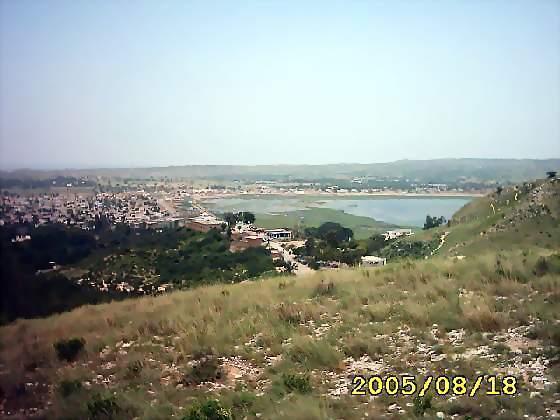
Pakistan mountains


Pakistan is a land of varied and unique landscape. While high mountain ranges dominate its North, series of low mountain ranges of Suleman, Pub, Kirthar and Mekran extend from North to Southwest and to South in a bone like manner. These low ranges dominate the plains and deserts to the East and warm and captivating beaches of the Arabian Sea to the South. It is, however, Northern Pakistan which is endowed with most unique geographical feature in the world. It is here that the three great, lofty and spectacular mountain ranges, Karakoram, Hindukush and Himalayas meet. In an area of about 500 kms in width and 350 kms in depth, is found the most dense collection of some of the highest and precipitous peaks in the world, boasting more than 700 peaks above 6000 metres, and more than 160 peaks above 7000 metres.

These include five out of the total fourteen above eight thousand metre high peaks on earth, namely the second highest rock pyramid - the K-2 (8611 m), the killer mountain Nanga Parbat (8125 m), the Hidden Peak, Gasherbrum I (8068 m), the Broad Peak (8047 m) and the Gasherbrum II (8035 m). This enormous mountain wealth makes Pakistan an important mountain country, offering great opportunities for mountaineering and mountain related adventure activities. The area is aptly called a paradise for mountaineers, adventure seekers and nature lovers. The compelling charm of these high, challenging, endless sea of rugged rock and ice pinnacles lure large number of climbers, adventure seekers and nature lovers from across the five continents to the Northern Areas and Chitral, each year.
Read more...


The Motorways of Pakistan are a series of international-standard, high-speed, limited-access highways in Pakistan, which are maintained and operated by the National Highway Authority.

The first motorway in Pakistan was operationalized in November 1997 and, by April 2010, the total length of operational motorways in Pakistan was 632 km with another 233 km under construction and further planned.
Features

Pakistan's motorways are either six-lanes or four-lanes with a universal minimum speed limit of 80 km/h and maximum speed limit of 100 km/h for heavy transport vehicles and 120 km/h for light transport vehicles. They have a central median and are fenced on the outside for safety and prevention of unauthorized access by pedestrians, animals and slow-moving vehicles. Entry to all motorways in Pakistan are restricted to fast moving vehicles only. Pedestrians, bicycles, motorcycles, animal-driven carriages and other slow moving vehicles are not permitted onto the motorways. The Pakistan National Highways & Motorways Police do, however, use heavy motorbikes for patrolling purposes. By February 2010, operational motorways in Pakistan had a combined length of 632 km with another 233 km under construction and further planned. Pakistan's Motorways are part of its National Trade Corridor Project that aims to link Pakistan's three Arabian Seaports of Karachi Port, Port Bin Qasim and Gwadar Port to the rest of the country and further north with Afghanistan, Central Asia and China.
Read more...

Clifton Beach (Karachi)


Clifton Beach or Seaview is a beach in Karachi, Pakistan located on the Arabian Sea. It is one of the neighborhoods of Clifton, Saddar Town. It was the world's most popular silver-sand beach and health resort during 20th century but In 2003, it was affected by an oil spill.[1] The beach has attractions for families and tourists, including beachside horse and camel rides, amusement parks, restaurants, and swimming in the Arabian Sea.

Dolmen City an Under-Construction Shopping Mall and Commercial High-rise Complex at Clifton Beach.

A gated residential area called Seaview Apartments lies close to a section of Clifton beach known as Seaview beach or simply "Seaview". Further ahead lies Darakhshan Villas which comprises residential townhouses and huts.

Evening scene on Clifton beach.

Another attraction in this very area were the recently constructed Cineplex cinema houses for the entertainment starved people of Karachi, particularly for the people who reside in DHA and Clifton. This has happened after around three decades of cinema industry decline in Pakistan. Hollywood films are mostly screened here along with some selected Bollywood films. The cinema's are equipped with state of the art facilities and other entertainment sections.

The Defence Housing Authority is filling the beach area with sand to obtain more ground pushing the sea further back, which will change the shape and features of the beach.

Other beaches close to the city include Sandspit, Hawke's Bay, and Paradise Point - a sandstone rock promontory with a natural arch, but Clifton Beach is the most popular picnic destination in Karachi.

Read more...

The Changa Manga forest (Lahore)


 The Changa Manga is a planted forest and a wildlife center in Lahore District, Punjab, Pakistan.

Forestry

The entering route to the forest is located the with a road from the N-5 Highway near Bhai Pheru.[1] It covers an area of 4,860 hectares (12,000 acres)[2] and is one of the largest man-made forests on the planet. The planting and irrigation of it took place in the 19th century in the era of the British Raj due to the need for timber for the Indian railway network. Most trees belong to the species of Dalbergia sissoo (sheesham), Acacia nilotica (kikar) or Morus alba (mulberry).


Wildlife center

The Changa Manga forest is a hot spot concerning wildlife in Punjab. Wildlife within the borders of the plantation include a small remaining population of Nilgai, hog deer, wild boar and possibly axis deer. Jackal and Asiatic wild cat can be found in Changa Manga as well. Changa Manga also serves as a wildlife breeding center.

Changa Manga plantation is also an important place for restocking projects of Asiatic vultures in Pakistan. A Gyps Vulture Restoration Program was started in 2006 by WWF-Pakistan to conserve and breed endangered species of Gyps, especially Gyps bengalensis.

Recreation center

Parts of the forest have now been developed into a park with a rail road which gives the visitor a 25 km ride on a miniature train through the forest. There is also a lake called Lunar Lake where boating is possible. The forest park has good recreational facilities and a good quality hotel.


Read more...

Tourism of chakwal


Chakwal has landscape features including the canyons in Thirchak-Mahal and the yellow beds of muster"Surson". There are many man-made and natural lakes around the city in Kallar Kahar, Dhok Talian, Kot Rajgan, Khai, Khokar Zer ,Dharabi and the most beautiful village with all the modern facilities is called KHAJULA.

The Jhangar valley, Bisharat is situated on the road coming from Choa Saidan Shah facing West to East about 8 km in length between the villages of Kotli and Ara at 3,000 feet (910 m) above sea level. The weather during the summer is very pleasant and the hills are full of green bushes and olive trees[citation needed]. An interesting place of this valley is the Picnic Point of Chehl Abdal”[citation needed] hill top which is at 3,500 feet (1,100 m) above sea level. On the top of this hill is a shrine called Chehl-Abdal. Many people from local villages and from all parts of the country often visit the shrine and offer sacrifices. From the Chehl Abdal hill top one can see the great Punjab plains. To the north are the Margla hills and to the south one can see the Jhelum River. On the East & West side one can see the beautiful greenery of adjoining hills with rain forests consisting of thick jungle trees and bushes. Alexander the Great passed through this area (old Nandana Fort) near Ara on his way to fight Raja Porus on the banks of the Jhelum River in 326 BC.

Another well-known tourist place in the area is Kalar Kahar for which Zahir uddin Baber said “Kaller Kahar is a child of Kashmir[citation needed]. Kalar Kahar is 2,500 feet (760 m) above sea level and Chehl Abdal is 3,500 feet (1,100 m) above sea level.

Larri pathan is another beautiful place in Chakwal. One faction of the Kakka Zai Pathans migrated from Afghanistan and settled in a village called Lari Pathan[citation needed].

The famous temple-fort of Katas Raj is nearby also Chakwal has a well connected road network including a road to Jhelum and Lahore via the Sohawa road, a road to Pind Dadan Khan via the Choa Siaden Shah road, a road to Sargodha via Bhon and Khushab, a road to Rawalpindi via Mandra and to Mianwali via the Talagang Road.

It is connected to the GT road between Peshawar and Lahore via Sohawa and Mandra, the Indus Highway via Mianwali, and M2 Motorway via Kallar Kahar and Balkassar exits. The travelling distances and time has reduced considerably to Lahore, Rawalpindi, Sargodha, and Faislabad since the commissioning of the M2 Motorway
Read more...

The Bagh Ibne Qasim (clifton.karachi)

The Bagh Ibne Qasim (Urdu: باغ ابنِ قاسم‎ ) is located in Clifton,Karachi, Sindh, Pakistan. Inaugurated by President Pervez Musharraf on February 27, 2007, Pakistan's biggest park constructed under Clifton Beach Development Project on 130 acres (0.53 km2) of land. The old Toyland Theme Parkhas been done away with and this park replaces it. The park cost PKR 600 million and has been completed in 300 working days. More than 10 million people visited the park per year. Is also the largest family park in South Asia.

Prior to the initiation of construction on Bagh-e-Ibne Qasim, 73 acres (300,000 m2) of land was freed from the grip of land grabbers. The entire Clifton beach, and the area now covered under the park. In June 2005, Sindh Governor Dr. Ishrat-ul-Ebad Khan took it upon himself to restore this major historical entertainment area to its original splendor. City Nazim Syed Mustafa Kamal also played a part in gifting the Jehangir Kothari Parade back to the people of Karachi.

For entertainment purposes of visitors, the park has a turtle pond, in addition to which it also has 24 state-of-the-art washrooms. In order to create an element of originality, the park also has 20 stone canopies. Moreover, hundreds of thousands of unique rose saplings have been planted throughout the park. The park will also feature fast food outlets able to accommodate 500 persons at a time. This park has various murals of dinosaurs that are extremely huge and add to the excitement on the faces of the visitors that come from various parts of Pakistan. This park overlooks the 90 meter fountain of kpt and thus adds to the beauty of the Clifton area.

Read more...

Tomb of Allama Muhammad Iqbal

The Tomb of Allama Muhammad Iqbal is a simple but impressive structure located in Lahore, Pakistanin the Hazuri Bagh lawn between the Badshahi Mosque and the Lahore Fort where both the grand structures (the Mosque and the Fort) face each other.[1] Official guard is maintained by Pakistan Rangers. The architecture reflects a combination of Afghan and Moorish styles and is entirely constructed of red sandstone.[2] Hundreds of visitors come to the mausoleum every day to pay their respects to thepoet-philosopher.[3]

He was one of the major inspirations behind thePakistan Movement, and is revered in Pakistan asMuffakir-e-Pakistan (The Thinker of Pakistan) orShair-e-Mashriq (The Poet of the East).[4] Iqbal died on April 21, 1938 in Lahore at the age of 60. Since theindependence of Pakistan, an academy named after him (Iqbal Academy) has been established to promote and disseminate his poetical and philosophical messages and teachings. As another tribute, the recently renovated Lahore airport has also been named after him as Allama Iqbal International Airport

Structure

The rectangular structure of the mausoleum has two gates at the eastern and southern side respectively, inlaid with marble. The grave is built of white marble. The tombstone is made of lapis lazuli and inscribed with Quranic verses in calligraphy. The tombstone was a gift from the people ofAfghanistan. On the inside walls, six couplets of a ghazal are carved from Iqbal's peotical work Zabur-e-Ajam (Persian Psalms).[5] Outside, there is a small garden, distributed into small plots. The mausoleum was designed by Hyderabad Deccan’s then Chief Architect, Nawab Zain Yar Jang Bahadur and took thirteen years to build at a cost of about one hundred thousand (Rs.100,000)Pakistani rupees. The major reason for delay was the stoppage of red-stone from Jaipur in post-independence India.[6]


Read more...